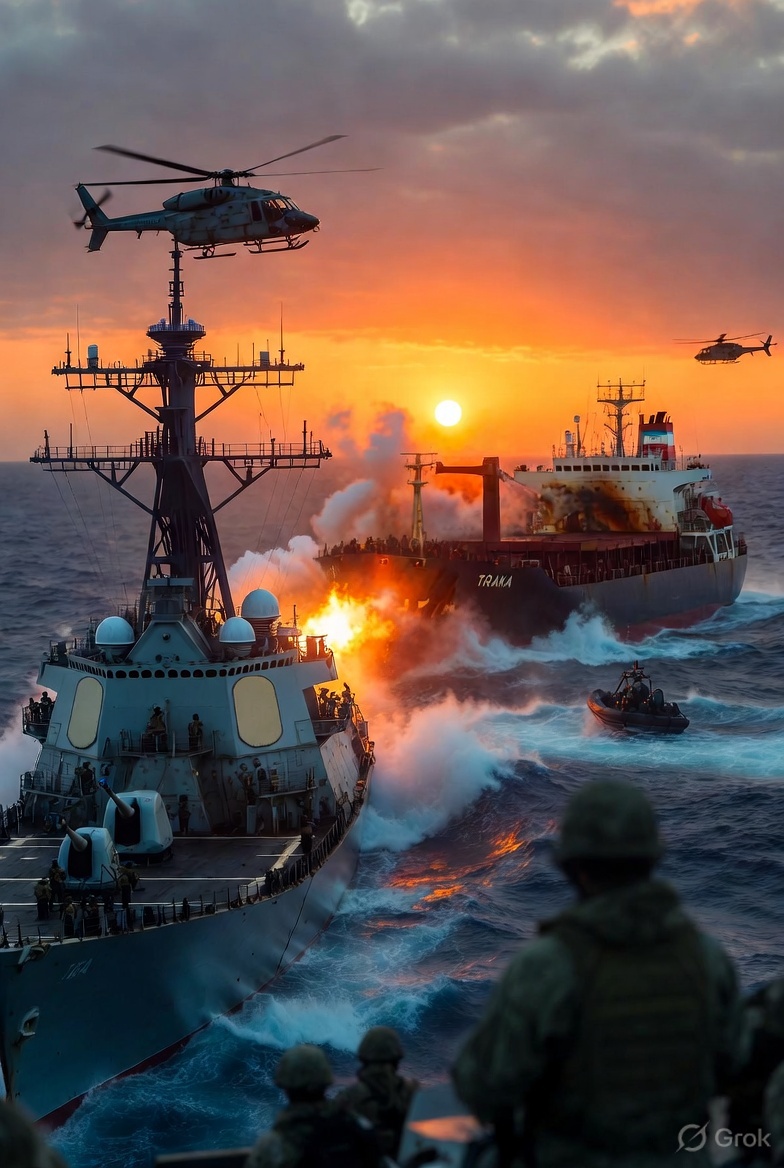
US Navy Boards Iran-Flagged Ship Amid Hormuz Blockade
The geopolitical situation in the Middle East took a sharp turn after the US Navy boarded and seized an Iran-flagged cargo ship attempting to bypass the Strait of Hormuz blockade. This marks the first major enforcement action since the United States imposed a naval blockade on Iranian-linked maritime activity earlier this month.
The incident has Hormuz Blockade significantly escalated tensions between Washington and Tehran, raising concerns about global oil supply and the possibility of further military confrontation.
What Happened in the Strait of Hormuz?
According to reports, a US Navy destroyer intercepted an Iranian-flagged cargo vessel named Touska in the Gulf of Oman. The ship allegedly ignored multiple warnings issued by US forces before action was taken.
After a prolonged standoff lasting several hours, the US Navy disabled the ship by firing into its engine room, bringing it to a halt. Marines then boarded the vessel and took control without resistance from the crew.
This operation marks the first seizure under the newly imposed blockade, signaling stricter enforcement approach by the United States. Hormuz Blockade
Why Did the US Seize the Ship?
1. Enforcement of Sanctions
The vessel was reportedly under US sanctions and linked to alleged illegal activities, including possible involvement in restricted trade networks.
2. Hormuz Blockade Strategy
The US naval blockade aims to cut off Iran’s maritime trade, which is a crucial part of its economy. Since the blockade began, multiple vessels have been turned back, but this is the first one forcibly seized.
3. Pressure for Negotiations
The move is also seen as a strategic pressure tactic to bring Iran back to the negotiating table amid ongoing geopolitical tensions.
Iran’s Response and Global Reactions
Iran has strongly condemned the seizure, calling it “armed piracy” and a violation of international law.
Tehran has also threatened retaliation, warning that such actions could lead to broader regional instability. Meanwhile, global powers are expressing concern that the situation could derail fragile diplomatic efforts and ceasefire agreements.
Impact on Global Oil and Trade
1. Oil Prices Surge
The Strait of Hormuz is one of the world’s most critical oil transit routes, handling a significant portion of global energy supply. Following the incident, oil prices reportedly surged due to fears of disruption.
2. Shipping Risks Increase
Commercial shipping companies are now facing higher risks and insurance costs, with some vessels avoiding the region altogether.
3. Market Volatility
Global stock markets have shown volatility, reflecting uncertainty around the escalating conflict.
What Happens Next?
Potential Military Escalation
The seizure could trigger further naval confrontations in the region, especially if Iran attempts to retaliate.
Diplomatic Breakdown
Planned peace talks are now at risk, with Iran reportedly unwilling to engage under current conditions.
Long-Term Strategic Impact
If the blockade continues, it could reshape global trade routes and energy security policies, affecting countries far beyond the Middle East.
Conclusion
The incident where the US Navy boards an Iran-flagged ship is more than just a maritime operation—it’s a turning point in an already volatile geopolitical conflict. With rising tensions, economic consequences, and the risk of escalation, the world is closely watching what happens next in the Strait of Hormuz.
As the situation unfolds, this event could have lasting implications for global security, energy markets, and international diplomacy.
US Boards Iran-Flagged Ship Amid Hormuz Tensions US Navy
The US Navy boarded an Iran-flagged ship near the Strait of Hormuz, marking the first seizure during the blockade. The move has heightened tensions with Iran, raised global oil concerns, and increased fears of military escalation, impacting international trade and regional stability.
