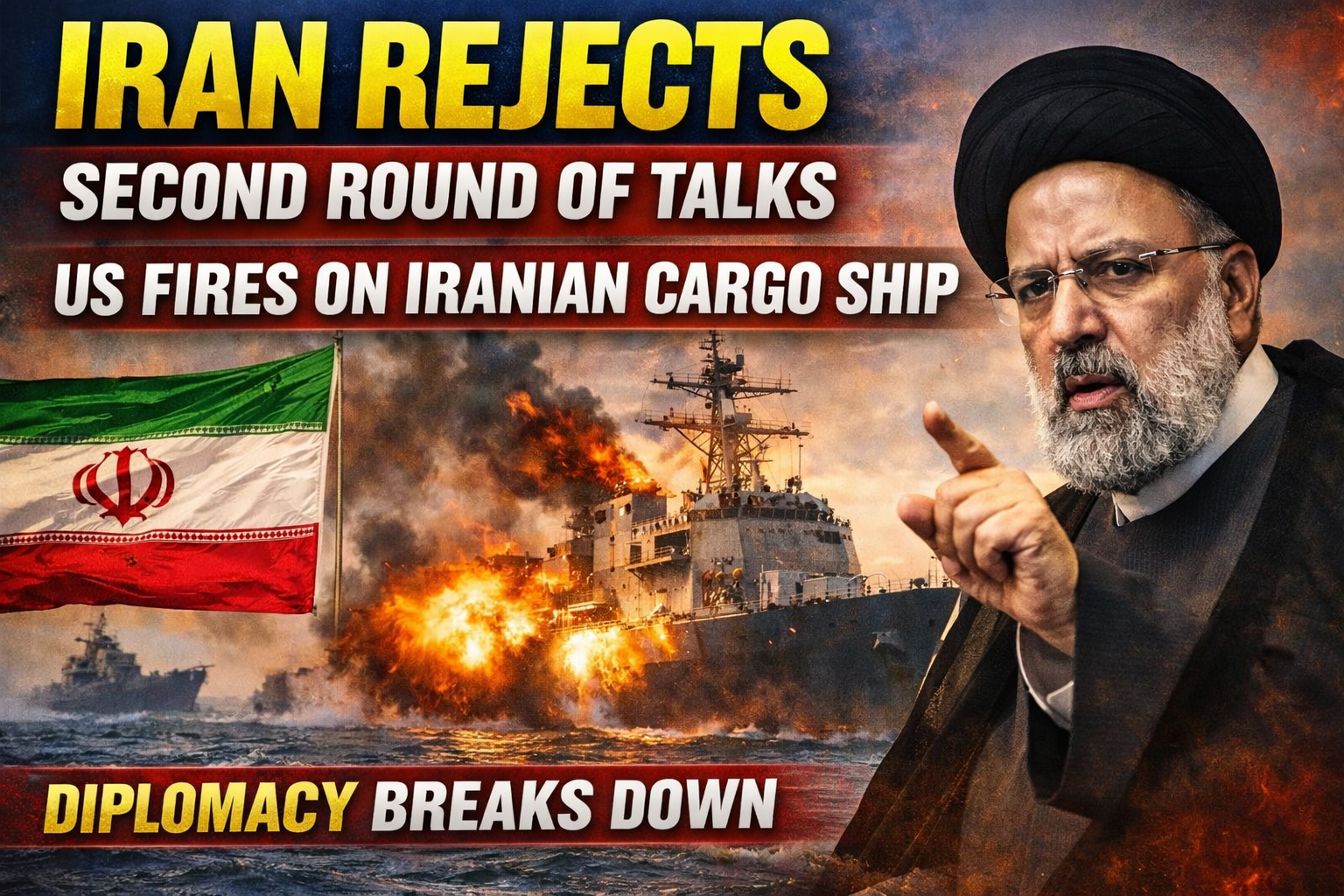
Iran Rejects Second Round Tensions between the United States and Iran have escalated sharply after Iran rejected a second round of peace talks following a dramatic naval incident in the Strait of Hormuz. The development comes after US forces fired on and seized an Iranian cargo ship, further straining already fragile diplomatic relations.
This move has raised serious concerns about the collapse of the ongoing ceasefire and the possibility of a broader conflict in the Middle East. Iran Rejects Second Round
What Triggered the Crisis?
The situation intensified when the US Navy intercepted an Iranian-flagged cargo vessel attempting to bypass a naval blockade. After the ship reportedly ignored warnings, US forces opened fire and boarded the vessel, taking control.
The United States claims the ship was linked to sanctioned activities, while Iran has condemned the action as a violation of international law and ceasefire agreements.
This incident has become a major turning point, directly influencing Iran’s decision to step away from diplomatic negotiations.
Why Iran Rejected the Talks
1. Alleged Ceasefire Violation
Iran has accused the US of breaching the ceasefire through its naval blockade and military actions. Officials argue that continued aggression makes meaningful dialogue impossible.
2. “Excessive Demands” by the US
Tehran criticized Washington for imposing unrealistic expectations and constantly shifting positions, which it says undermines trust in negotiations.
3. Ongoing Hormuz Blockade
The naval blockade remains a key sticking point. Iran considers it a major obstacle to peace, insisting that talks cannot proceed under pressure.
Impact on Global Stability
Rising Oil Prices
Iran Rejects Second Round
The Strait of Hormuz handles nearly one-fifth of global oil supply, making any disruption a major economic concern. Following the incident, oil prices surged amid fears of supply shocks.
Threat to Global Trade
Shipping routes in the region are now at risk, with increased insurance costs and potential delays affecting international trade.
Market Uncertainty
Global markets have reacted nervously, reflecting uncertainty about whether the situation could escalate into a larger conflict.
Diplomatic Fallout and What’s Next
Peace Talks in Jeopardy
The second round of talks, expected to take place in Pakistan, now appears unlikely. Iran has clearly stated there are no plans to resume negotiations under current conditions.
Risk of Military Escalation
With both sides exchanging threats and military actions, the risk of further confrontation in the region remains high.
Global Concerns
International leaders are increasingly worried that the situation could destabilize the Middle East and impact global energy security. Iran Rejects Second Round
The decision where Iran rejects the second round of talks marks a critical escalation in US-Iran relations. Combined with the US firing on an Iranian cargo ship, the situation signals a dangerous shift from diplomacy to confrontation.
If tensions continue to rise, the consequences could extend far beyond the region, affecting global markets
Iran Rejects Second Round of Talks After US Fires on Cargo Ship
Iran has rejected a second round of talks with the United States following a tense naval incident in the Strait of Hormuz. The decision came after US forces fired on and seized an Iranian cargo ship, escalating
Why Talks Failed
Ceasefire Concerns
Iran claims the US action violates ongoing ceasefire efforts, making negotiations difficult.
Blockade Dispute
Tehran also opposes the US naval blockade, calling it unfair pressure during diplomacy.
Global Impact
The Strait of Hormuz is a critical oil route, and rising tensions have already pushed oil prices higher while increasing risks for global trade.
Conclusion
As Iran rejects further talks, the situation signals growing instability, with fears of escalation and long-term impacts on global markets and regional peace. Iran Rejects Second Round
