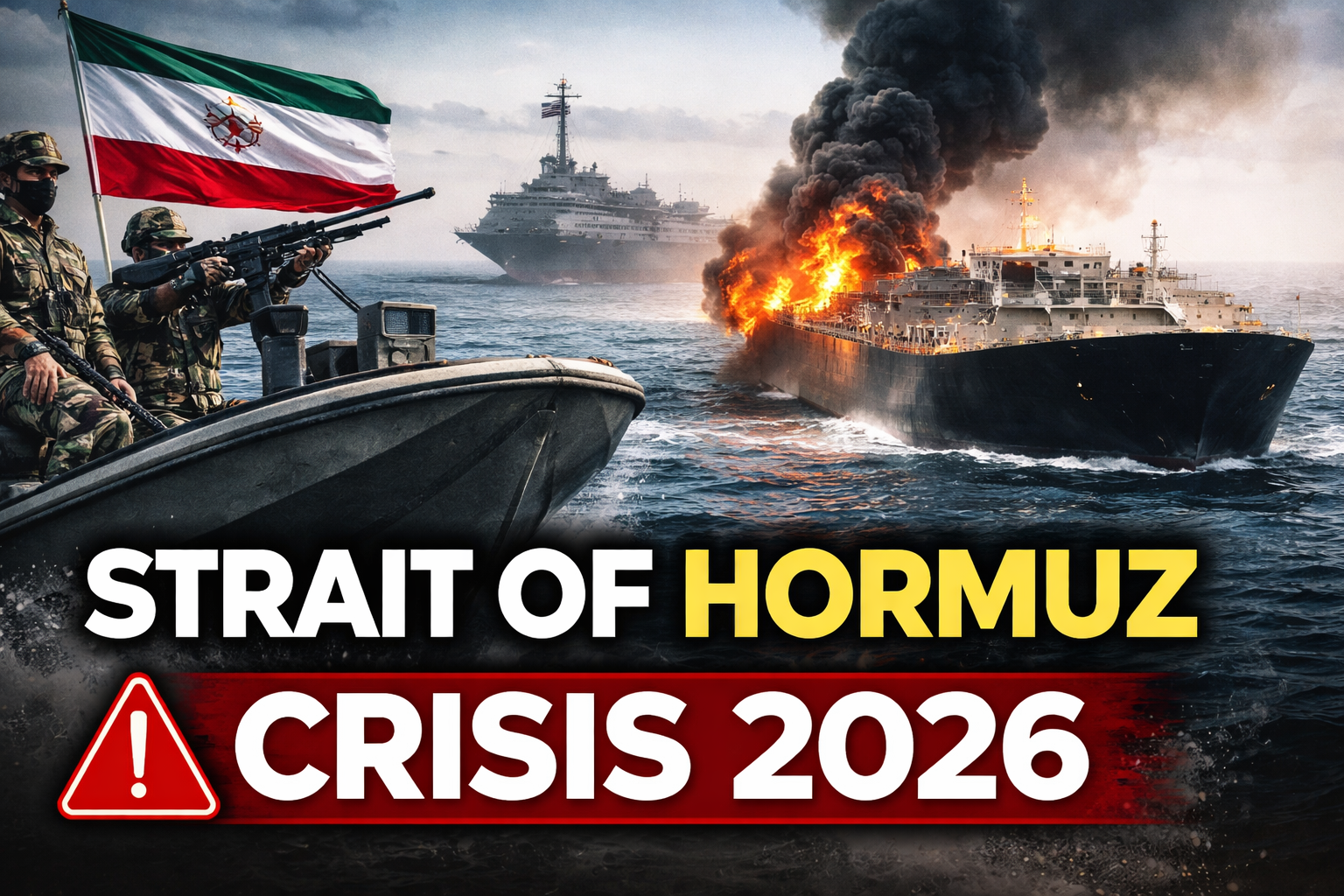
The situation around the Strait of Hormuz has sharply escalated again just as fragile peace talks are nearing a decisive phase.
What’s happening right now
- Iran has reimposed strict controls (effectively a closure) of the strait, reversing a brief reopening during a ceasefire.
- Iran forces, particularly the Islamic Revolutionary Guard Corps (IRGC), have fired warning shots at ships and forced several vessels—including an Indian-flagged tanker—to turn back.
- Only limited, tightly managed passage is being allowed in some cases, under Iranian supervision.
Why Iran is doing this
- The move is directly tied to the ongoing U.S. naval blockade of Iranian ports.
- Tehran says it will maintain control until the blockade is lifted and insists that freedom of navigation must be “mutual.”
- The U.S., meanwhile, has said the blockade will stay until a broader peace or nuclear deal is reached.
Link to the peace talks
- A temporary ceasefire (since April 8) created hope for reopening the strait and ending hostilities.
- But negotiations have stalled, and both sides are using the strait as leverage in talks.
- Mediators (including countries like Pakistan and Egypt) are still pushing for a deal, but timing is uncertain.
Why this matters globally
- The strait carries around 20% of global oil and gas supply, making it one of the world’s most critical chokepoints.
- Disruptions are already:
- Driving energy price volatility
- Threatening supply chains
- Raising risks of a wider regional conflict
Big picture
This isn’t just a shipping issue—it’s a high-stakes bargaining tool in a broader confrontation between Iran and the U.S. With both sides refusing to back down (blockade vs. closure), the strait has become the pressure point that could either force a deal—or trigger further escalation.
If you want, Hormuz I can break down how this might affect India’s oil supply and prices specifically.
The Strait of Hormuz crisis 2026 has entered a dangerous new phase as Iran reimposes strict restrictions on one of the world’s most critical oil transit routes. The move comes at a time when peace talks are approaching a decisive moment, raising fears that diplomacy could collapse under renewed pressure Iran .
Iran’s military has once again asserted “strict control” over the Strait of Hormuz, reversing a brief reopening that followed a fragile ceasefire. Reports indicate that Iranian forces have warned ships against passing and even fired on vessels attempting to transit the waterway. This escalation highlights how quickly the situation can deteriorate despite ongoing negotiations.
At the center of the conflict is a growing standoff between Iran and the United States. Tehran has linked its actions directly to the U.S. naval blockade of Iranian ports, insisting that it will maintain restrictions until the blockade is lifted. Meanwhile, Washington has refused to ease pressure, arguing that the blockade will remain until a broader agreement is reached.
The Strait of Hormuz is not just a regional issue—it is a global economic lifeline. Roughly 20% of the world’s oil supply passes through narrow passage, making any disruption a major threat to energy markets. Even temporary restrictions can cause price volatility, increase shipping costs, and disrupt supply chains worldwide.
Why this matters globally
- The Strait of Hormuz carries roughly one-fifth of the world’s oil supply, making it one of the most critical energy chokepoints.
- Continued disruption is already:
- Pushing oil prices upward
- Increasing shipping risks and insurance costs
Bottom line
This is no longer just a maritime issue—it’s a high-stakes bargaining tool. Iran’s renewed restrictions signal that the situation is fragile and reversible, and the outcome now depends heavily on whether the current round of peace efforts can break the deadlock.
